Which wood type is best for baseball bats?

Maple is a very hard, dense wood. The surface hardness is about 20% greater than ash. The harder the surface, the faster the ball will jump off the bat. This is one of the reasons maple has become so popular – that and the fact that Barry Bonds and other big league sluggers swing maple. Maple is a closer grained hard wood than ash. The grain is not as easy to see as it is with ash. The straightness of the grain does not matter as it does with ash. Maple will not splinter. The grain will not separate. The hardness of maple makes a bat with less flex.

Ash on the other hand does flex. When a ball is hit with an ash bat, there is a trampoline effect. The ball doesn’t just jump off; it first compresses the wood, then like a spring board it leaves with much more force than maple. This spring board effect is one of ash’s greatest strengths and weaknesses. The spring board and compression traits of an ash bat will cause the grains to separate over time. The flex of an ash bat will appear to have a larger sweet spot. Ash bats do not snap the way a maple bat does. Ash bats will break just as easy, but usually they just wear out. The grain of an ash bat will delaminate over many uses.

Birch is tougher than ash, and more flexible than maple. This hard hitting imported wood does not flake like ash and out-performs maple. A lighter wood, birch allows athletes to swing larger barreled bats through the hitting zone. After two seasons of extensive game play testing in the Cape Cod Baseball Summer League and the Alaskan League, a player is quoted as saying, “Maple is a thing of the past.” Birch bats have become a viable choice. However, many of our customers own bats of all three types of wood so they can see which wood they prefer, and select the right bats for their practice and gameday needs.

Bamboo is also a newer choice on the market. Many companies have recently introduced bamboo models. Some bamboo models are used in conjunction with maple (see Composites below). Since bamboo chutes are hollow, they are made by pressing bamboo “strips” into billets, and then the billets are combined and made into bats. Bamboo is an extremely strong wood, with tension strength greater than steel.

Composite wood bats are typically some combination of different wood types that have been fused together to make a more durable bat. For this reason composite bats will last the longest, and will also be among the most expensive wood bats. Because these bats are engineered specifically to be long lasting, many composite bats will come with some type of warranty against breakage, which is rare for wood bats. Composites also make great practice bats.

Posted in SPC Sports News | Leave a comment

Little League Bat Ban

Little League Baseball announced on Dec. 30 that it has issued a moratorium on the use of composite barreled bats in all of its baseball divisions.

The ban closely follows the moratorium passed earlier this summer by the NFHS, which governs the playing rules of 17,000 high schools in the United States.

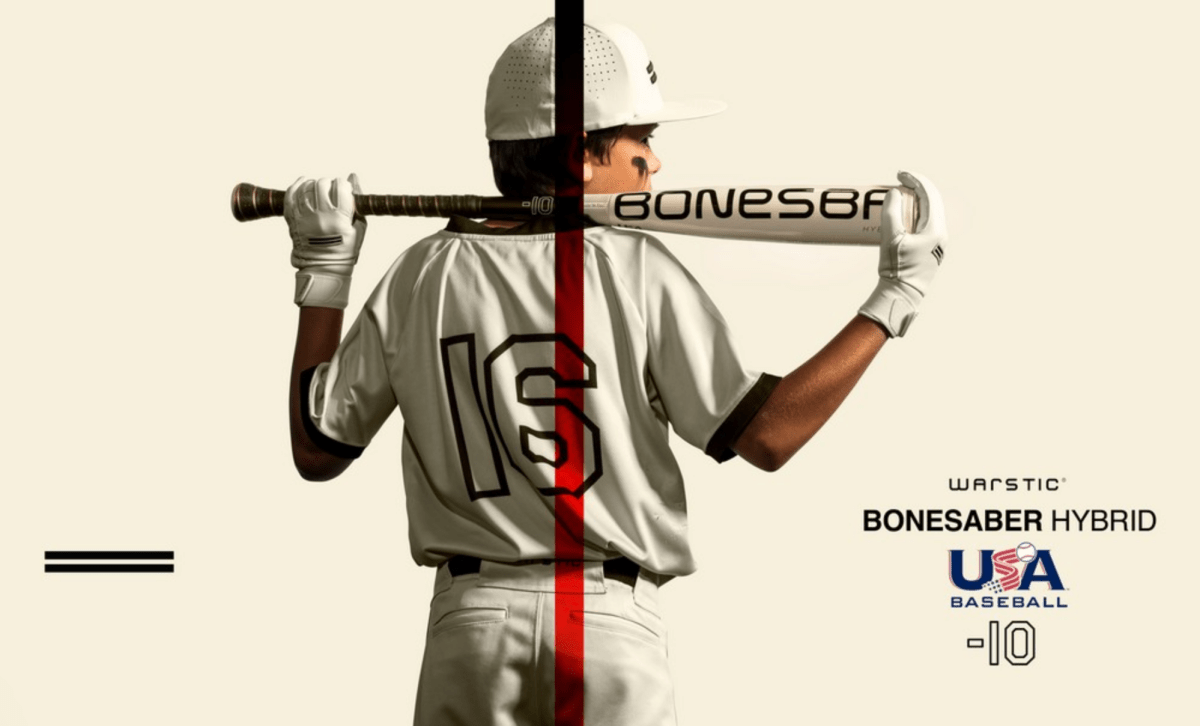
The Little League ban prohibits the use of composite-barreled baseball bats in sanctioned competitions. Wood bats, metal bats and metal bats with composite handles — known as hybrid bats — will not be affected.

In a prepared release, Little League president and CEO Stephen D. Keener cited research showing that, with heavy usage, composite barreled bats fall of out of compliance with Little League’s bat performance standard.

“While they may meet the standard when new, they can exceed that standard after a break-in process,” he said.

Little League will grant waivers and allow specific composite-barreled baseball bats if they can stay within Little League’s Bat Performance Factor specification after a throrough break-in process.

Babe Ruth/Cal Ripken

Earlier this fall, the Babe Ruth League announced that it will not allow composite-barreled bats in its 13-15 and 16-18 divisions.

The decision follows the moratorium placed on composite bats by the NFHS, the largest governing body of high school athletics in the United States. Like the NFHS ban, it only applies to bats with composite barrels.

Bats with composite handles and tapers will still be allowed.

The Babe Ruth League WILL ALLOW composite-barreled 2 1/4″ bats in the Cal Ripken Major, Minor, Rookie and T-Ball Divisions this season. The league had previously issued a moratorium on the use of composite-barreled bats in its Cal Ripken divisions, but on February 4, the league removed the moratorium.

PONY Baseball

PONY has not restricted the use of composite-barreled bats in any of its divisions.

Dixie Youth Baseball

Dixie Youth Baseball announced on Jan. 27 that it will not impose restrictions on the use of composite bats during the 2011 baseball season.

USSSA

In a decision announced on Jan. 10, USSSA has said that it will not enforce an immediate ban on composite-barreled baseball bats in its 14-and-under divisions.

“While other sanctioning bodies have chosen to ban older composite bats, USSSA has determined that it would be grossly unfair to disallow a bat with no notice to the retailers, manufacturers and customers who had previously relied on USSSA rules in the sale or purchase of a bat,” the organization said in a statement.

Instead, the organization will roll out a new mark for approved bats in the fall of this year, and it will go into effect in 2012. To receive the organization’s new stamp, bats must stay within the USSSA’s performance standard after a thorough break-in process.

Posted in SPC Sports News | Leave a comment

BBCOR FAQ

Wondering what the difference is between a BBCOR, a BESR and an ABI? Want to know what’s legal and what isn’t?

You came to the right place.

Here is our guide to the upcoming changes in bat performance standards. First, we have some definitions of terms. Second, there is a league-by-league timeline. Third, we have a list of bats that will be legal in BBCOR-only leagues.

Definitions

BESR (Ball Exit Speed Ratio) — This is a longstanding test used to ensure that non-wood bats play similar to wood bats. It tests a bat’s “exit speed,” i.e. how fast the ball bounces off a composite or aluminum bat barrel. It is being phased out.

BBCOR (Batted Ball Coefficient of Restitution) — This is a new, more-accurate test used to ensure that aluminum and composite bats play similar to wood bats. It includes the ABI, listed below. It will be adopted by many organizations in the coming years.

ABI (Accelerated Break-In Test) — This is a test performed on bats to simulate heavy use. Composite bats perform better the more you use them, so when combined with the BBCOR, the ABI ensures that even with heavy usage, composite bats perform similar to wood bats.

NCAA timeline

Now in effect — All bats used in the NCAA and any organizations that follow NCAA rules (such as the NAIA), must be BBCOR certified. The BESR certification is no longer used.

Composite-barreled bats, which were previously banned in the NCAA, will be allowed if they can pass the BBCOR test.

NFHS timeline

From now until Jan. 1, 2012 — BESR bats are still allowed in NFHS affiliated high school games. However, composite-barreled bats are banned from competition, unless they pass both the ABI and BESR tests.

Starting Jan. 1, 2012 — All bats must be BBCOR certified. The BESR certification will no longer be used.

Composite-barreled bats, which were previously banned, will be allowed if they can pass the BBCOR test.

Posted in SPC Sports News | Leave a comment

NFHS ruling on composite baseball bats

Beginning this fall, composite-barreled baseball bats will be banned in high school competition.

The National Federation of State High School Associations announced Wednesday July 7th 2010 that it will forbid the use of composite-barreled baseball bats, starting in the 2010-11 school year. Composite tapers and handles will still be allowed.

The NFHS has banned composite-barreled baseball bats in high school competitionSimilar to the regulations the NCAA adopted last summer, the ban applies to all baseball bats with composite barrels. Composite bats are designed to play similar to wooden and aluminum bats. However, through normal usage, composite-barreled bats fall out of compliance with safety regulations.

To be more specific: Hitting with the bat causes the graphite to stretch and the barrel to flatten. This causes balls to leave the bat much faster than what is allowed.

According to the NFHS, the ban will remain in effect until composite-barreled bats can consistently meet the “Batted Ball Coefficient of Restitution” BBCOR safety standard.

The NFHS governs the playing rules for more than 18,500 high schools across the United States. It should be noted that not all high schools and high school organizations are affiliated with the NFHS.

Posted in SPC Sports News | Leave a comment

New Rip It Defense stops sun glare!

One of the biggest complaints about wearing a fielders mask is that it makes it impossible to wear a hat or visor. Using a fielders mask players had to choose between shielding their eyes or increasing their safety and confidence. Not anymore.

The new Rip-It Defense with Blackout Technology breaks through this limitation with a newly designed detachable visor. The new visor easily and seamlessly attaches to the top of the Rip-It Defense. The visor is constructed to have the same look and feel of a standard softball visor.

Posted in Rip it Elite | Leave a comment

NFHS rules in favor of the CF4 -3

As of today, the NFHS has clearly ruled the DeMarini CF4 composite barrel baseball bats meet its standards and IS APPROVED for high school play for the 2010-11 season. This is one of the most popular models for high school players and as of today, the CF4 is the only composite barrel bat permitted for high school play next spring.

Posted in DeMarini News | Leave a comment

SPC Sports is now on twitter!

Click this link http://twitter.com/spcsportsinc to follow us

Posted in SPC Sports News | Leave a comment